

What are cataracts?
A cataract is a condition where the eye’s natural lens becomes cloudy, reducing the amount of light that reaches the retina. This clouding can result in blurred or hazy vision and, in more severe cases, lead to vision impairment or loss of sight. People with cataracts often find that colours appear less vibrant, and everyday activities like reading, driving, or recognising faces become more difficult. Cataracts typically develop slowly over time, and the early stages might not be noticeable until vision problems begin to interfere with daily life.
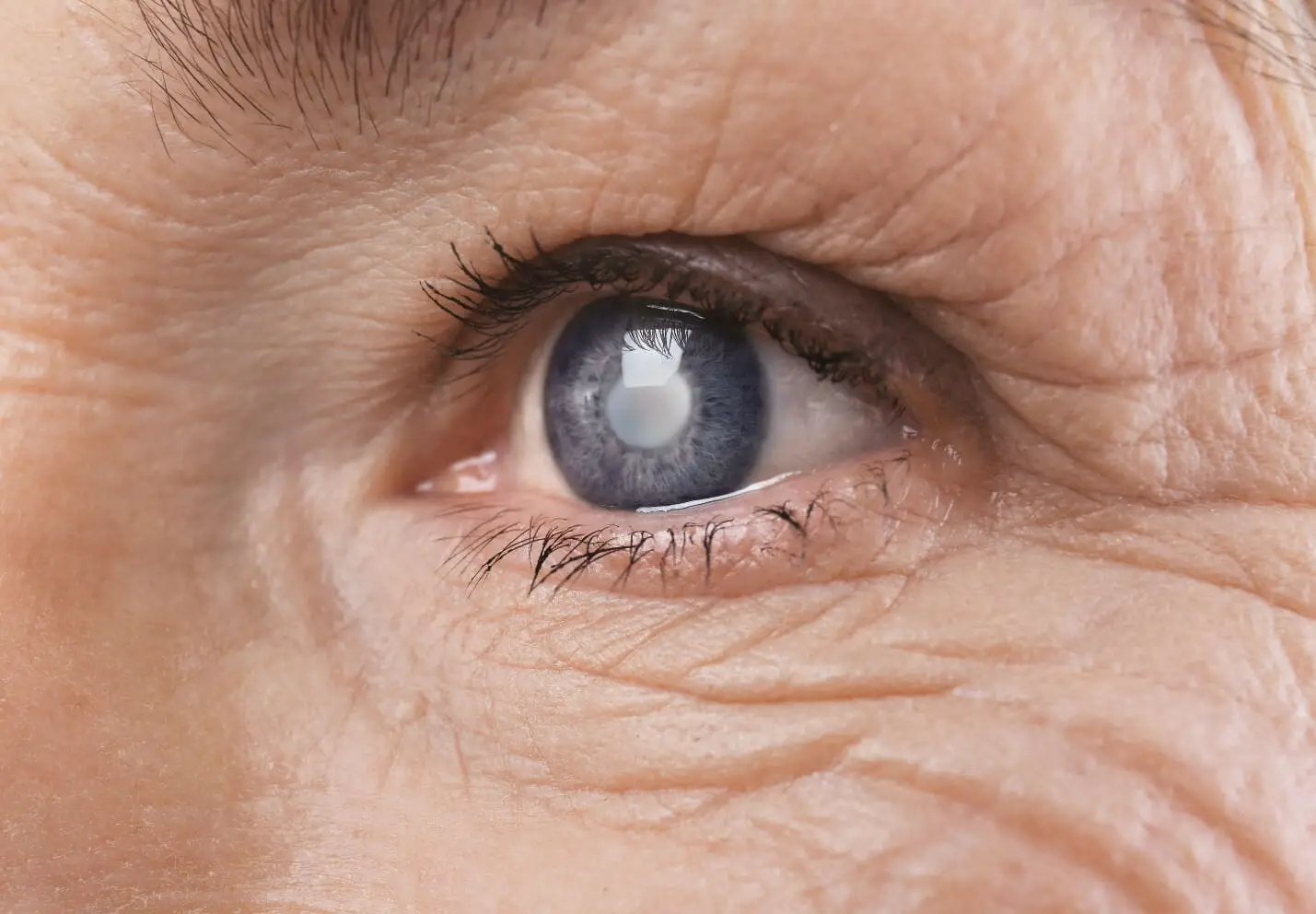
Causes of Cataracts
The primary cause of cataracts is age-related changes to the eye’s lens. As we age, proteins in the lens begin to break down, causing the lens to become cloudy. However, there are other factors that may contribute to the development of cataracts at an earlier age:
- Diabetes: People with diabetes have an increased risk of developing cataracts.
- Certain Medications: Long-term use of medications like corticosteroids can accelerate cataract formation.
- Eye Trauma or Surgery: Previous eye injuries or surgeries may increase the likelihood of cataracts.
- High Myopia: People with higher levels of myopia are more prone to developing cataracts.
- Family History: A genetic predisposition can also contribute to the development of cataracts.
Conditions associated with Cataracts
- Chronic diseases like diabetes
- Smoking and excessive alcohol consumption.
- Prolonged exposure to UV light without proper eye protection.
- Several risk factors may increase the likelihood of developing cataracts, including
- Obesity and high blood pressure.
Symptoms and early signs of Cataracts
Cataracts often develop slowly, and many people are unaware of the problem until it affects their daily lives.
Common symptoms include:
- Blurred or cloudy vision: As the lens becomes clouded, objects may lose sharpness, making it harder to see details.
- Difficulty with contrast and colour perception: Colours can appear faded or yellowed, making it challenging to distinguish between shades, especially in low light.
- Glare and light sensitivity: Bright lights, such as headlights, may cause discomfort, and you may see halos or rings around lights, especially at night.
- Frequent changes in glasses prescription: Cataracts can cause vision changes, requiring more frequent updates to your glasses prescription.
- Double vision in one eye (diplopia): The cataract can distort vision, causing overlapping/double images in one eye.
Examination/Diagnosis
Cataracts are diagnosed through a comprehensive eye examination conducted by an ophthalmologist. During the exam, a slit-lamp is used to thoroughly examine the eye, including the lens and other structures. Eye drops may dilate the pupil, allowing the specialist to discuss the lens and retina in more detail.
Investigation
In addition to a standard eye examination, further tests may be recommended to determine the severity of the cataract and to check for any associated conditions:
- Corneal imaging (Pentacam) to assess the health of the cornea.
- Biometry to measure the eye’s shape and size, which helps determine the strength of the replacement intraocular lens (IOL).
- Optical Coherence Tomography (OCT) to scan the retina and detect any underlying retinal conditions.
Cataract Surgery Options at Moorfields UAE IOL Types, Procedure & Recovery
Currently, no medical treatment, such as eye drops or medication, can reverse or prevent cataracts. The most effective treatment is surgery, which involves removing the cloudy natural lens and replacing it with an artificial lens.
Cataract surgery is a routine and highly successful procedure typically lasting no more than 20 to 30 minutes. It is usually performed under local anaesthesia, though sedation or general anaesthesia may be used in certain cases.
Types of Intraocular Lenses (IOLs) for Cataract Surgery
During cataract surgery, the clouded natural lens is replaced with an artificial lens called an intraocular lens (IOL). Several types of IOLs are available to suit different needs:
- Monofocal Lenses: Provide clear vision at a single set distance (usually for distance vision), though glasses may still be needed for reading or intermediate tasks.
- Multifocal Lenses: These lenses offer clear vision at multiple distances (near, intermediate, and far), reducing the need for glasses after surgery.
- Extended Depth-of-Focus (EDOF) Lenses: EDOF lenses provide a wider range of high-quality vision for intermediate and distance tasks, with reduced reliance on glasses.
- Accommodative Lenses: These lenses mimic the eye’s natural ability to change focus, moving or adjusting shape inside the eye to provide a broader range of vision.
- Toric Lenses: Designed specifically for patients with astigmatism, toric lenses correct the shape of the eye and provide clear vision. They are available as monofocal, multifocal, and EDOF options.
What to Expect After Cataract Surgery?
After cataract surgery, most patients notice an improvement in vision within a few days, though full recovery may take up to 6 weeks. It is normal to experience some mild discomfort, such as itching, sensitivity to light, or slight swelling, which typically subsides within a few days.
Your eye doctor will provide clear post-operative care instructions, including the use of prescribed eye drops to prevent infection and reduce inflammation. During recovery, it’s important to avoid rubbing your eye and strenuous activities, allowing the eye to heal properly. Follow-up appointments will be scheduled to monitor your progress and ensure successful recovery.
Adult cataract Specialists

Dr. Ammar Safar
Chief Medical Officer and Consultant Ophthalmologist & Vitreoretinal SurgeonGCAA Approved Specialist Aviation Medical Examiner
Professor of Ophthalmology (Adjunct)


Dr. Luisa M. Sastre
Consultant Ophthalmologist in General Ophthalmology and Cataract SurgeryGCAA Approved Specialist Aeromedical Examiner

Dr. Osama Giledi
Consultant Ophthalmologist in Cataract, Cornea and Refractive Vision Correction SurgeryGCAA Approved Specialist Aeromedical Examiner
Associate Professor Of Ophthalmology (Adjunct)

Dr. Miguel Morcillo
Consultant Ophthalmologist in Cornea, Cataract and Refractive vision correction surgery

Dr. Salman Waqar
Consultant Ophthalmologist in adult and paediatric glaucoma and cataract surgeryAssociate Professor Of Ophthalmology (Adjunct)
GCAA Approved Specialist Aviation Medical Examiner

Dr. Suhair Twaij
Consultant Ophthalmologist in Adult & Paediatric Strabismus Surgery, Paediatric Ophthalmology, Adult Cataract Surgery GCAA Approved Specialist Aviation Medical Examiner

Dr. Avinash Gurbaxani
Visiting Consultant Ophthalmologist in Uveitis and Medical Retinal Diseases and Cataract Surgery

Dr. Muhammad Amjad
Visiting Consultant Ophthalmologist in Adult and Paediatic retinal diseases and Cataract surgery

Dr. Ziad Khoueir
Visiting Consultant Ophthalmologist in Adult Glaucoma and Cataract surgery
Dr. Salman Waqar
Consultant Ophthalmologist in adult and paediatric glaucoma and cataract surgeryAssociate Professor Of Ophthalmology (Adjunct)
GCAA Approved Specialist Aviation Medical Examiner

Dr. Ramzi Ghanem
Consultant Ophthalmologist in Medical Retina, Vitreoretinal and Cataract Surgery

Dr. Syed M. Asad Ali
Consultant Ophthalmologist in Paediatric Ophthalmology and Strabismus and Cataract Surgery

Dr. Esmaeil Arbabi
Medical Director and Consultant Ophthalmologist in Corneal transplant, Cataract & Refractive Surgery
FAQ
Cataract surgery is usually considered when changes in vision begin to affect everyday activities, rather than at a fixed stage. It is not always necessary to wait until a cataract becomes advanced before discussing treatment, as earlier intervention may help avoid further reduction in vision and increasing difficulty with daily activities. At Moorfields UAE, this is assessed clinically, and the findings are discussed with you to determine the most appropriate next step.
Cataracts do not always require immediate treatment and can often be monitored over time. In many cases, surgery is recommended when vision is significantly affected or when the cataract begins to interfere with daily activities. The timing of treatment is based on clinical findings and individual needs, which are reviewed during your assessment.
Cataract assessment at Moorfields UAE is carried out through a structured clinical evaluation to understand how the cataract is affecting your vision and overall eye health. This includes measuring your vision, examining the eye in detail and carrying out additional imaging where required. The findings are reviewed to provide a clear diagnosis and to discuss appropriate treatment options.
A range of intraocular lens options is available, including lenses designed to provide clear vision at a single distance or across multiple distances. The most appropriate lens depends on your prescription, visual requirements and lifestyle. These options are discussed during your assessment to ensure the choice is aligned with your expectations and clinical findings.
Cataract surgery is a widely performed procedure with a well-established safety profile when carried out following appropriate assessment and clinical standards. As with any surgical procedure, it does carry risks, although it is generally considered very safe. At Moorfields UAE, surgery is delivered within an audited clinical system, with outcomes measured against recognised benchmarks to support patient safety and quality of care. Surgery is performed by internationally trained specialists using advanced methods such as phacoemulsification and laser-assisted surgery, following strict clinical protocols to support safety and precision.
Moorfields UAE monitors cataract surgery outcomes on an ongoing basis as part of its commitment to patient safety, quality and clinical transparency. Cataract complication rates and patient satisfaction with surgery consistently outperform recognised benchmarks. View the latest published figures on our satisfaction rates page. These outcomes are supported by clinical standards aligned with JCI and ACHSI accreditation.
Many patients experience improved vision following cataract surgery; however, the need for glasses depends on the type of lens used and individual visual requirements. This is discussed in detail during your assessment so that expectations are clear before treatment.
Cataract surgery is typically performed as a day-case procedure, meaning patients return home on the same day. The procedure itself usually takes around 15 to 30 minutes. Many patients notice an improvement in vision within a few days, although full stabilisation may take several weeks. Recovery varies between individuals, and you will be given clear guidance on what to expect and any follow-up care required.