




Neuro-ophthalmology is a speciality that combines neurology and ophthalmology to diagnose and treat vision issues related to the nervous system. Neuro-ophthalmologists specialise in diagnosing and treating vision disorders caused by neurological conditions such as brain injuries, stroke, or infections, as well as visual field defects, involuntary facial spasms, and eyelid abnormalities.
How can nerve issues affect your vision?
When nerve pathways between the brain and the eyes are damaged, it can lead to various vision problems. For instance, damage to the optic nerve may cause partial or complete vision loss. Nerve damage can also cause involuntary eye movements (nystagmus), drooping eyelids (ptosis), or difficulty aligning both eyes (strabismus). Nerve-related vision issues may also cause depth perception problems, visual field defects, and light sensitivity. Early diagnosis and treatment are crucial to prevent long-term vision damage.

Common symptoms of vision problems caused by Nerve issues
Neuro-ophthalmologic disorders often present with a variety of symptoms. If you experience any of the following, it is essential to seek medical attention:
- Double vision (diplopia): Seeing two images of the same object.
- Blurred vision: Difficulty focusing or seeing clearly.
- Drooping eyelids: Known as ptosis, occurs when the upper eyelid falls lower than normal and may affect one or both eyes. It can be related to age, muscle or nerve changes, and in some cases may require treatment if it interferes with vision.
- Eye movement problems: Difficulty controlling or coordinating eye movements, often leading to dizziness or disorientation.
- Loss of peripheral (side) vision: Difficulty seeing objects outside your direct line of sight.
- Involuntary eye movements: Conditions like nystagmus, where the eyes move rapidly without control.
- Headaches: Persistent headaches may be linked to optic nerve swelling or other neurological issues.
- Sudden vision loss: May signal a serious underlying condition
Diagnosing neurological vision problems
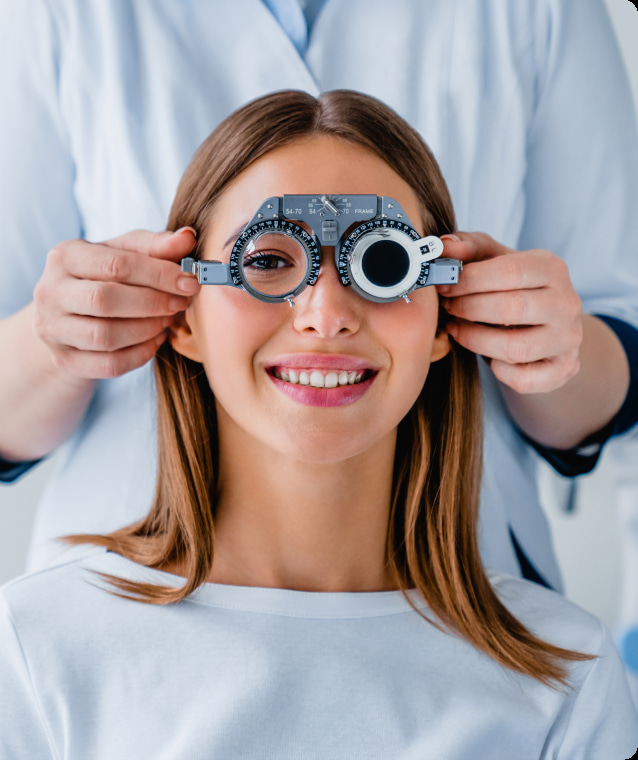
Diagnosing neuro-ophthalmologic disorders requires a thorough eye and neurological examination. At Moorfields Eye Hospital Dubai, our neuro- ophthalmologists use advanced diagnostic tools to assess the condition of the eyes and nerves, including:
- Visual field tests: To assess peripheral vision and detect blind spots.
- Comprehensive Orthoptic examination: To accurately assess the movement of the eyes and binocular functions
- HESS Charting: A clinical tool used to assess and diagnose eye movement issues, particularly paralytic or restrictive strabismus.
- Optical coherence tomography (OCT): A non-invasive imaging test that examines the optic nerve and retina.
- Magnetic resonance imaging (MRI) or computed tomography (CT): To obtain detailed images of the brain, optic nerves, and surrounding structures, which can help identify tumours, swelling, or other abnormalities.
- Electromyography (EMG): A test to measure muscle activity in patients with muscle and nerve conditions like myasthenia gravis.
- Blood tests: To detect any underlying autoimmune or inflammatory conditions affecting vision
Conditions treated
We provide treatment for the following conditions:
- Double vision: Misalignment of the eyes or neurological issues causing patients to see two images instead of one.
- Blepharospasm and facial movement disorders: Involuntary movements of the eyelids or face, often linked to nerve dysfunction.
- Eyelid abnormalities: Such as ptosis, where the eyelid droops due to nerve or muscle issues.
- Myasthenia gravis: A condition that affects the muscles responsible for eye movement, leading to droopy eyelids and double vision.
- Nystagmus: Involuntary, rapid eye movements that can cause vision problems.
- Optic nerve disorders: Including optic neuritis, ischemic optic neuropathy, and compressive optic neuropathies.
- Orbital tumours: Tumours around the eyes that can affect vision and eye movement.
- Papilledema: Swelling of the optic nerve head due to increased pressure in the brain.
- Pupillary abnormalities: Unequal pupil sizes (anisocoria), which may indicate underlying neurological conditions such as third nerve palsy or Horner’s syndrome.
- Strabismus: Misalignment of the eyes, often causing double vision or visual discomfort.
- Thyroid eye disease: A condition related to thyroid dysfunction that affects the muscles and tissues around the eyes.
- Unexplained vision loss: Sudden or gradual vision loss that may have a neurological cause.
- Visual field defects: Often related to stroke, brain tumours, or multiple sclerosis, these defects can cause blind spots or reduced peripheral vision.
Treatment options for neurological vision problems
Treatment for neuro-ophthalmologic disorders often involves a multi-disciplinary approach. At Moorfields Eye Hospital, our neuro-ophthalmologists in Dubai work closely with orthoptists, neurologists, neurosurgeons, and radiologists to develop a comprehensive treatment plan. Some treatment options include:
- Medication: This is used to manage underlying conditions such as myasthenia gravis, optic neuritis, or inflammation of the optic nerve.
- Botox injections: These are used to treat conditions like blepharospasm and certain types of strabismus.
- Surgical interventions: These are used for cases such as orbital tumours, eyelid abnormalities, or severe strabismus that requires correction.
- Vision therapy and/or therapeutic prisms: To address double vision or strabismus and improve eye movement coordination.
- Corticosteroids: These are used to reduce inflammation in conditions like optic neuritis.
- Radiation or chemotherapy: Oncological treatments may be necessary if a tumour is affecting the eyes or optic nerves.
Looking for more information?
Explore our frequently asked questions for additional information about your condition, care and treatment.
Neuro-Ophthalmology Specialists

Dr. Salma Yassine
Consultant Ophthalmologist in Paediatric Ophthalmology and Adult & Paediatric Neuro-ophthalmology- Paediatric ophthalmology
- Adult neuro-ophthalmology
- Paediatric neuro-ophthalmology
- Children’s eye care
- Squint and eye misalignment (strabismus)
- Neuro-ophthalmic assessment
- Eye, optic nerve and brain-related visual conditions
- Bachelor of Science with High Distinction from the American University of Beirut, Lebanon
- Medical degree from the American University of Beirut, Lebanon
- Ophthalmology residency at the American University of Beirut Medical Center, Lebanon
- Fellowship in Neuro-Ophthalmology at the University of Minnesota, USA
- Fellowship in Paediatric Ophthalmology and Strabismus at Children’s National Medical Center, Washington, DC, USA
- Master’s degree in Clinical Operations from Harvard Medical School, USA
- Member of the American Association for Pediatric Ophthalmology and Strabismus (AAPOS)
- Member of the North American Neuro-Ophthalmology Society (NANOS)
- Member of the Lebanese Ophthalmological Society (LOS)
- Research in intracranial hypertension and nanophthalmos
- Published research on nystagmus and nanophthalmos in leading scientific journals


Dr. Alaa Bou Ghannam
Visiting Specialist Ophthalmologist in Neuro-Ophthalmology, Paediatric Ophthalmology, Paediatric Glaucoma & Adult Strabismus- Neuro-ophthalmology
- Paediatric ophthalmology
- Paediatric glaucoma
- Adult strabismus
- Bachelor of Science with High Distinction from the American University of Beirut, Lebanon
- Medical degree from the American University of Beirut, Lebanon
- Ophthalmology residency at the American University of Beirut Medical Centre
- Fellowship in Paediatric Ophthalmology and Adult Strabismus at Children’s National Health System and George Washington Hospital, Washington DC, USA
- Fellowship in Neuro-Ophthalmology at the University of Colorado, USA
- Member of the American Academy of Ophthalmology (AAO)
- Member of the Lebanese Ophthalmological Society (LOS)
- Member of the North American Neuro-Ophthalmology Society (NANOS)
- Member of the American Association for Pediatric Ophthalmology and Strabismus (AAPOS)
- Research in clinical ophthalmology and neurology
- Published more than a dozen research papers and book chapters
- Research topics include strabismus, optic nerve diseases, paediatric glaucoma, paediatric ophthalmology, ocular electrophysiology and nystagmus
- Published in leading medical journals
FAQ
You may be referred to a neuro-ophthalmologist if a routine eye examination does not identify the cause of your vision problems or if an existing neurological condition is affecting your vision.
Symptoms that may require assessment include unexplained reduced vision, persistent double vision, a drooping eyelid or a noticeable difference in pupil size. A neuro-ophthalmology assessment may also be recommended if a routine eye examination identifies changes in the optic nerve, such as swelling, or if you experience vision problems associated with conditions such as multiple sclerosis, stroke or a previous head injury.
During your appointment, the neuro-ophthalmologist will review your symptoms, medical history and any previous test results. The examination may include checking your vision, eye movements, pupil reactions, peripheral (side) vision and the health of your optic nerves.
Depending on the findings, additional tests or scans may be recommended to help identify the underlying cause of your symptoms. Eye drops may be used to widen your pupils, which can temporarily blur your vision for several hours. Therefore, it is advisable to arrange alternative transport. You should also bring your glasses, a list of any medications you are taking and relevant medical reports or previous scan results.
A neuro-ophthalmologist may recommend additional tests to help identify the underlying cause of your vision problems, particularly if the examination suggests that the nerves or brain may be involved.
An MRI scan provides detailed images of the optic nerves, brain and surrounding areas, while blood tests can help identify inflammation or other medical conditions that may be affecting your vision.
The neuro-ophthalmologist will review the results with you, explain the findings and discuss any recommended next steps.
Some vision problems caused by nerve conditions can improve with treatment or over time, while others may lead to lasting changes in vision. The outcome depends on the underlying cause, the extent of nerve damage and how early treatment begins. Treatment may help improve vision or manage symptoms such as double vision, depending on the condition. The neuro-ophthalmologist will explain the available treatment options and discuss what improvement you may expect.
Vision may improve in some cases of optic nerve damage, depending on the underlying cause, its severity and how early treatment begins. For example, vision affected by inflammation of the optic nerve may improve over weeks or months, although some changes in vision may remain. Recovery is generally more limited when reduced blood supply to the nerve causes the damage. If pressure on the optic nerve causes vision loss, early treatment to relieve the pressure may help restore some vision.
However, in cases where the optic nerve has sustained permanent damage, the resulting vision loss generally cannot be reversed. Early diagnosis and appropriate treatment can help protect remaining vision, while visual aids and rehabilitation support may help patients manage everyday activities.
Most headaches are not caused by problems with the eyes or optic nerves. However, increased pressure around the brain can cause headaches and swelling of the optic nerves, which may affect vision if left untreated. Warning signs may include headaches that worsen when lying down or upon waking, brief episodes of blurred or dimmed vision, a whooshing sound in the ears that follows the heartbeat, or double vision. Persistent headaches, particularly when accompanied by vision changes, should be assessed promptly to identify the underlying cause. A sudden, severe headache or sudden vision loss requires immediate emergency assessment.
Eyelid twitching is common and often linked to tiredness, stress, excessive caffeine intake or dry eyes. In most cases, it is harmless and settles without treatment. Getting enough sleep, reducing stress and limiting caffeine may help. However, persistent or more severe twitching can sometimes indicate an underlying condition affecting the nerves or muscles around the eyes. For example, repeated involuntary closing of the eyelids may be associated with blepharospasm, while twitching that spreads to other muscles on one side of the face may indicate hemifacial spasm. If the twitching continues for more than two weeks, an eye examination is recommended. Seek assessment sooner if it causes your eyelids to close involuntarily or spreads to other parts of your face.
Moorfields Eye Hospital Dubai has neuro-ophthalmology specialists who assess and manage a range of conditions, including optic nerve disorders, double vision and problems affecting eye movements. They work alongside ophthalmologists from other specialties and orthoptists, who assess eye movements and how the eyes work together. When needed, they also coordinate with neurologists, neurosurgeons and radiologists to support the diagnosis and management of complex conditions.