


Amblyopia (Lazy Eye): What Parents Should Know
Medically reviewed April 2026
Amblyopia, commonly known as “lazy eye”, is a common childhood condition in which vision in one eye is reduced, even though the eye itself may look healthy.
The early detection and timely treatment of amblyopia are important because the visual system develops rapidly during childhood. Delaying diagnosis or treatment may allow the reduced vision to become permanent.
It is therefore important for parents to understand the signs of amblyopia and knowing when to seek an eye examination for their children can make an important difference.
In this blog, we explain what amblyopia is, what may cause it, the signs parents should look out for, and how treatment can help support a child’s vision.
What is Lazy eye?
A lazy eye (amblyopia) develops when the brain and the eyes do not work together properly during early childhood, when vision is still developing.
If one eye sends a blurred or misaligned image because of a prescription difference, a squint, or something blocking vision, the brain receives two unequal pictures. To avoid confusion or double vision, the brain gradually starts to ignore the image from the weaker eye.
Over time, this “switching off” (suppression) means the visual connections between the weaker eye and the brain don’t develop as they should. As a result, vision in that eye remains reduced, even if the eye itself is healthy.
For this reason, our paediatric eye specialists in Dubai recommend early vision assessments and, when necessary, early treatment to ensure that both eyes develop normally.
What causes Lazy eye?
Lazy eye can develop for a few different reasons. The most common causes are outlined below.
Strabismus (Squint)
Strabismus, also known as a squint, is one of the most common causes of amblyopia. When the eyes do not point in the same direction, the brain receives two different images. To avoid double vision, the brain may begin to ignore the image from one eye, which can affect how vision develops in that eye over time.
Refractive errors
Lazy eye can also develop when one eye sees more clearly than the other because of a difference in focusing power between the eyes as a result of refractive errors. This is often due to a difference in prescription between the eyes and may involve short-sightedness, long-sightedness, or astigmatism. When one eye consistently provides a clearer image, the brain may rely more heavily on that eye,ignoring the weaker one.
Childhood cataract
A cataract, which is a condition that leads to clouding of the eye’s natural lens, can block light from entering the eye properly. This prevents clear images from reaching the brain and may also lead to amblyopia.
Drooping eyelid (Ptosis)
If a drooping eyelid covers all or part of the pupil, it can reduce the amount of clear visual information reaching the eye. When this happens during the years when vision is still developing, it may interfere with normal visual development and contribute to amblyopia
Risk factors
Lazy eye may also be more likely in children who:
- Have a family history of Lazy eye or squint
- Were born prematurely
- Be born with low birth weight
- Have developmental delays
These factors do not always cause amblyopia directly, but they can increase the need for closer monitoring.
What are the signs of lazy eye?
Lazy eye commonly does not always present with any obvious outward signs. However, possible signs may include:
- eye misalignment
- squinting or closing one eye when looking at something
- tilting the head to focus
- difficulty with activities that rely on visual coordination,
In many cases, children do not realise there is a problem because they may not be able to compare vision between the two eyes or explain what feels different. This is especially true when the condition has been present from a very young age.
It is therefore advisable to arrange an eye examination with a specialised children’s eye doctor in Dubai to screen for amblyopia when you child starts school or earlier if any of the above signs are seen during the early years of development.
How is amblyopia diagnosed?
Lazy eye is diagnosed through a detailed children’s eye examination. At Moorfields Dubai, this is carried out through a multidisciplinary approach involving a paediatric ophthalmologist, an orthoptist, and optometrist, allowing different aspects of the child’s vision and eye development to be assessed carefully.
During the examination, the eye care specialist may evaluate:
- Visual acuity in each eye
• Eye alignment
• Focusing ability
• Eye coordination - Need for glasses correction
• Overall eye health
These tests are usually done with each eye tested separately, as well as together, to understand how each eye is seeing and whether one eye is weaker than the other. In some cases, eye drops may also be used to help measure the focusing power of the eyes more accurately.
What is the effect of lazy eye on children
When one eye is not seeing as clearly as the other, it can affect more than just vision. Many of the everyday activity’s children rely on involve both eyes working together, and lazy eye can make some of these tasks more difficult, such as:
- Judging distances: activities like catching a ball, going down stairs, or pouring a drink can be harder when depth perception is reduced
- Learning and concentration: reading, copying from the board, or staying focused in the classroom may be more challenging, particularly if the child is unaware their vision is reduced in one eye
- Coordination and play: tasks that rely on hand-eye coordination, such as sports or drawing, may feel more difficult
Lazy Eye Treatment in Dubai
The aim of lazy eye treatment is to encourage the brain to use the weaker eye more effectively and to support the best possible visual development. Treatment is tailored to the child and depends on the cause of the lazy eye, the child’s age, and how much the vision is affected.
Correcting refractive errors with glasses
If a refractive error is contributing to lazy eye, the first step is often to prescribe glasses. In some children, glasses alone can lead to a meaningful improvement in vision in the weaker eye. This improvement may take several weeks, and in some cases around 14 to 16 weeks or more, before the full effect can be assessed. If vision remains reduced after this period, additional treatment may be recommended.
Patching therapy
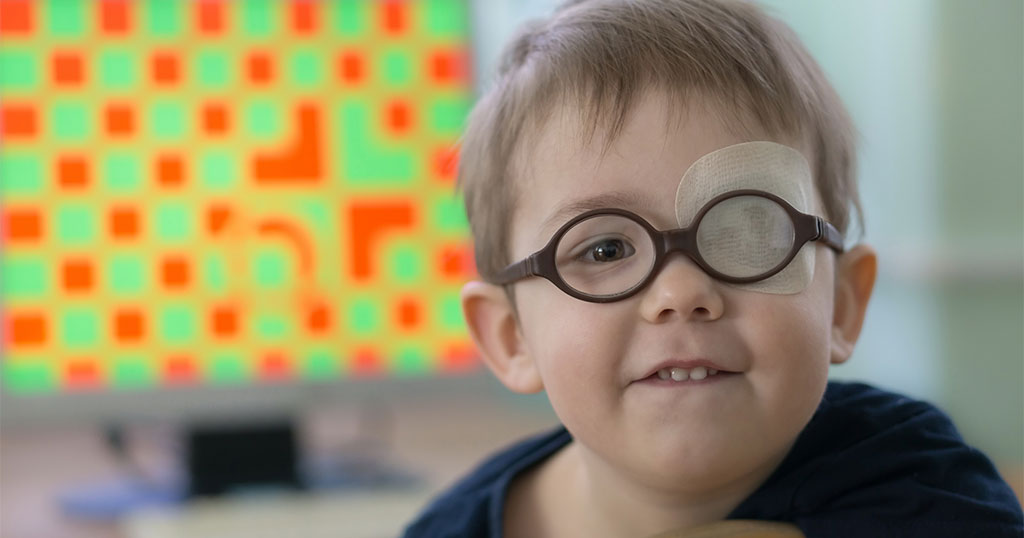
Patching is one of the most commonly used treatments for amblyopia. This involves covering the stronger eye for a prescribed number of hours each day so that the weaker eye is encouraged to work harder. Over time, this can help improve vision in the weaker eye. The treatment plan is adjusted to the child’s needs and is monitored through follow-up appointments
Our Paediatric ophthalmologists for lazy eye treatment in Dubai provide guidance to parents on how to make patching easier for children.
Atropine eye drops
Another treatment option involves the use of atropine eye drops. The drops are placed in the stronger eye to temporarily blur vision, particularly for near tasks, which encourages the child to use the weaker eye more. In some cases, atropine can be used instead of patching, and studies have shown that it can be similarly effective for certain children with lazy eye.
Treating the underlying cause
If lazy eye is linked to an underlying condition such as a squint, cataract, or drooping eyelid, treatment may also need to address that cause directly. This can sometimes involve surgery. However, surgery does not usually replace treatment for lazy eye itself, and patching or atropine may still be needed before or after the procedure.
What outcomes can treatment achieve?
With early diagnosis and appropriate treatment, many children can achieve a meaningful improvement in vision. Treatment may begin to help within a few weeks, but it often takes months to reach the best result. Not every child will achieve perfect vision, but most can improve significantly with treatment. Earlier treatment usually gives the best chance of success, although some older children may still benefit, particularly if they have not been treated before.
Conclusion
Lazy eye can affect a child’s vision, but the key to successful treatment is early detection through routine screening, rather than waiting for visible signs. Many children do not report problems, as the brain adapts by relying on the stronger eye, so issues can easily go unnoticed.
Early years vision screening is therefore essential. The risk factors for amblyopia, such as unequal vision or subtle eye misalignment, are often invisible to parents and teachers. Screening helps identify these early, when treatment is most effective.
By prioritising timely vision checks, we can support healthy visual development and give children the best chance to see clearly and thrive.
Frequently Asked Questions (FAQs)
1. Can amblyopia be treated?
Yes. In many cases, amblyopia can be successfully treated, especially when detected early in childhood. Treatment depends on the underlying cause and may include glasses, patching therapy, or atropine eye drops. The earlier treatment begins, the better the chances of improving vision in the weaker eye.
2. Does patching work for lazy eyes?
Patching is generally very effective when started early and followed consistently. The success of treatment depends heavily on how regularly the patch is worn. Children who follow the treatment plan as recommended are more likely to experience significant improvement.
3. Do all children with amblyopia need to wear an eye patch?
Not necessarily. The treatment approach depends on the cause and severity of the amblyopia. In some children, glasses alone may improve vision. If vision remains reduced, patching or atropine eye drops may be recommended to stimulate the weaker eye.
4. How many hours per day does a child need to wear a patch?
The number of hours varies depending on the child’s age and the level of vision in the amblyopic eye. Your eye care specialist will recommend a tailored treatment plan and adjust it based on the child’s progress during follow-up visits
5. Will wearing a patch affect my child’s daily activities?
Initially, your child may find some activities more challenging while the stronger eye is covered. However, this is an important part of treatment because it encourages the brain to use the weaker eye. Children often adapt quickly, particularly when they are engaged in activities such as drawing, reading, or playing games.
6. Can amblyopia return after treatment?
In some cases, amblyopia can recur if treatment stops too early. For this reason, regular follow-up appointments are important to monitor progress and ensure the visual improvement remains stable.
7. Can amblyopia be prevented?
Amblyopia cannot always be prevented, but early detection significantly improves treatment outcomes. Routine eye examinations during childhood help identify problems such as strabismus or refractive errors before they affect visual development.
8. Can amblyopia affect a child’s learning?
Yes. Vision plays an important role in learning, particularly for reading, writing, and classroom activities. Untreated amblyopia may affect these tasks. Early diagnosis and treatment help support normal visual development and learning.
9. Will atropine affect my child’s vision?
Atropine mainly affects near vision, meaning activities such as reading may appear slightly blurred in the treated eye.
However, distance vision is usually less affected, so children can still move around normally.
Because the pupil becomes dilated, some children may experience increased sensitivity to bright light. Wearing sunglasses or a hat outdoors can help manage this.
10. How can I my child tolerate patching?
Children are often more comfortable wearing a patch when they are engaged in activities such as:
- Drawing or colouring
• Reading
• Playing games
• Using educational computer programmes
If the child’s vision is very poor initially, activities involving large, bright objects can help them engage more easily.