


Oculoplastic Surgery in Dubai: Treatments Designed to Protect Vision and Refine Appearance
This blog on Oculoplastic Surgery has been contributed by Dr. Alia Issa, Aesthetic Oculoplastic Surgeon.
Medically reviewed on June 2026
Oculoplastic surgery is commonly associated with eyelid rejuvenation, yet the speciality extends far beyond appearance, restoring comfort, protecting the eye’s surface, and, in many cases, helping to improve vision that has been quietly affected over time.
This blog looks at the treatments offered within oculoplastic surgery and the conditions they address, helping patients in Dubai and across the UAE make more informed decisions about their eye care.
What is oculoplastic surgery?
Oculoplastic surgery is a specialised field of ophthalmology that combines eye care with reconstructive and aesthetic surgery, focusing on the delicate structures around the eyes: the eyelids, the orbit (the bony eye socket), the tear drainage system and the surrounding facial tissues. These structures protect the eyes, support healthy tear function and contribute to clear, comfortable sight, so when they are affected by ageing, injury, disease or anatomical changes, patients may notice obstructed vision, irritation, watering, dryness or changes in how the eyes look and feel.
Because these areas are so closely linked to vision and eye health, every procedure is planned with the eye itself in mind, which means preserving eyelid movement, protecting the eye surface and supporting long-term visual comfort remain central to the treatment plan, whether the goal is functional, reconstructive or cosmetic.
Treatments provided by oculoplastic specialists
Oculoplastic care covers a broad range of treatments, and the most common treatments are outlined below.
Eyelid lift surgery for drooping eyelids (ptosis repair)
A drooping upper eyelid, known as ptosis, occurs when the eyelid sits lower than it should and may develop with age, after previous eye surgery, due to weakening of the lifting muscle, or, less commonly, from an underlying neurological cause. In children, significant drooping is assessed early because it can interfere with visual development.
When the eyelid sits too low, it may partially block the upper field of vision and make everyday tasks such as reading, driving or working on a screen more tiring. Treatment typically involves Surgery to tighten or reposition the muscle or tendon that lifts the eyelid. to help restore a clearer field of view alongside a more rested appearance.
Eyelid surgery for excess skin (blepharoplasty)
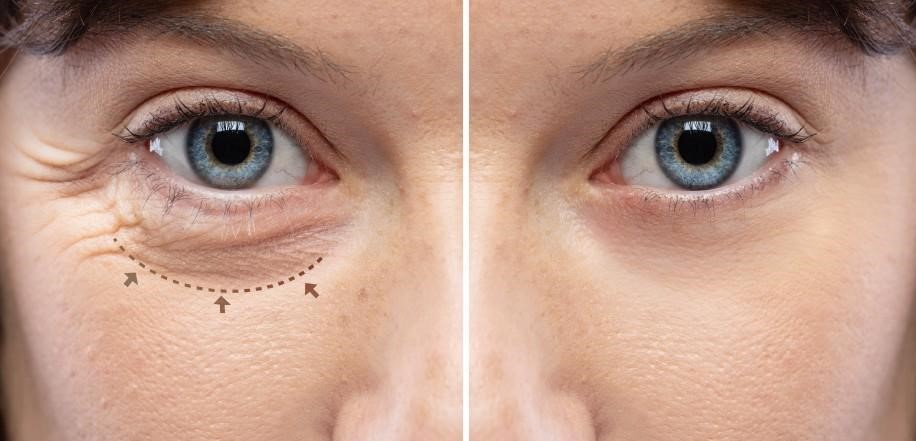
Excess skin around the eyes develops as the skin loses its elasticity, most often through ageing but also through factors such as genetics and long-term sun exposure. As this happens, the skin can begin to fold over the natural crease, creating a heavy, tired appearance and, in more advanced cases, reducing the upper field of vision. This is treated with a well-established procedure known as blepharoplasty, which carefully removes the excess skin, and sometimes a small amount of muscle or fat, while preserving eyelid function and natural expression.
Lower eyelid surgery may also be performed to address puffiness or under-eye bags caused by the repositioning of fatty tissue, and depending on the patient’s needs, blepharoplasty can be functional, cosmetic or both, with the surface of the eye and the tear film protected throughout.
Correcting eyelid malposition (entropion and ectropion repair)
Sometimes the eyelid turns the wrong way, inwards or outwards. Entropion is when the eyelid turns inward, causing the lashes to rub against the eye, which can lead to redness, watering and discomfort. Ectropion is when the eyelid turns outward, leaving the inner surface exposed and disrupting normal tear drainage, which may cause persistent tearing or dryness.
Because both conditions can affect comfort and the long-term health of the eye surface, surgical correction repositions the eyelid to its natural alignment, relieving irritation and helping tears drain as they should.
Tear duct surgery for watery eyes
Persistent watering is not always a sign of excessive tearing as it often occurs when tears do not drain properly through the tear drainage system. An oculoplastic specialist assesses this to determine whether the cause lies in eyelid position, a blockage within the tear ducts, or another factor.
When a blockage is responsible, a procedure to create a new drainage pathway, known as dacryocystorhinostomy, can relieve constant watering and reduce the risk of recurrent infection. Treatment is always matched to the underlying cause, so some patients may instead benefit from eyelid correction or other targeted management.
Orbital surgery
The orbit is the bony socket that surrounds and protects the eye, and conditions affecting this area can cause swelling, a bulging or sunken appearance, double vision or changes in eye movement, all of which require careful evaluation because they may be linked to inflammation, injury or thyroid eye disease.
Orbital treatments include surgery to relieve pressure behind the eye in thyroid-related conditions, repair of fractures to the thin bony walls of the socket following trauma, and the removal of growths within the socket. Where the socket has been damaged by injury, implants may be used to restore support and improve both function and appearance. Incisions for this delicate surgery are usually hidden within the natural folds of the eyelids.
Removal of eyelid lumps and skin cancers
Lumps on or around the eyelids are common, and most are harmless, though some need to be removed and examined, and certain skin cancers, such as basal cell carcinoma, can appear in this area. Oculoplastic surgeons remove these lesions with precision and, when tissue needs to be removed, carefully reconstruct the eyelid to preserve its function and natural shape.
For patients who have lost an eye through injury or disease, an artificial eye, also called an ocular prosthesis, is used to restore a natural appearance and support facial symmetry. The prosthesis is created by an ocularist, a specialist trained in the design and fitting of artificial eyes, who works alongside the oculoplastic surgeon to ensure the socket’s comfort and final appearance are considered together. The process involves a detailed assessment of the socket, shaping the prosthesis to fit comfortably, and providing guidance on long-term care, after which most patients can return to an active daily routine once the final fitting is complete. At Moorfields Eye Hospital Dubai, each prosthesis is hand-made and individually hand-painted to closely match the colour and fine detail of the patient’s natural eye.
Non-surgical aesthetic treatments
Aesthetic concerns around the eyes can often be addressed without surgery, and a range of non-surgical options can refine the area while preserving a natural appearance.
- Anti-wrinkle injections, commonly known as Botox, relax the small muscles responsible for expression lines such as frown lines and crow’s feet
- Tear trough filler is used more specifically to soften the hollows and shadows beneath the eyes that often contribute to a tired look
- Platelet-rich plasma (PRP) therapy, which uses a small, processed sample of the patient’s own blood to support skin renewal, may help improve the texture and freshness of the surrounding skin.
Because these treatments are carried out so close to the eye, they are best provided by specialists who understand its anatomy, keeping the focus on natural, balanced results that safeguard eye health.
What to expect during a consultation
A consultation begins with understanding the patient’s main concern, whether that is reduced vision, heaviness around the eyes, watering, irritation, asymmetry or an aesthetic goal. The oculoplastic specialist examines the eyelids, brow, tear ducts and eye surface, and may recommend further tests where vision is affected. A typical assessment can include:
- Evaluation of eyelid position and movement
- Assessment of the tear film and eye surface
- Visual field testing when vision appears affected
- Examination of the tear drainage system
- Review of medical history and any previous eye surgery
- Discussion of functional and aesthetic goals
The structures around the eyes are small, yet they do a great deal to protect the eye, support comfort and keep vision clear, so changes to them are worth understanding rather than simply living with. With the right care, many of these concerns can be eased, and treatment can be shaped around what matters most to each patient, whether that is improving sight, relieving irritation or refreshing a tired appearance.
What makes the difference is specialist care that places the health of the eye first. An oculoplastic specialist looks beyond appearance to how the eyelids, tear system and surrounding tissues support sight, so any treatment is planned to protect the eye as carefully as it improves comfort or natural balance. If you are noticing changes around your eyes, a consultation with an oculoplastic specialist can help identify the underlying cause and guide you toward the most suitable care, protecting both your sight and comfort in the long term.
Frequently asked questions
Is eyelid surgery cosmetic, or can it be medically necessary?
It can be either, and sometimes both. Some procedures are carried out to refresh the appearance of the eyes, while others are medically necessary, for example when a drooping eyelid or excess skin begins to block part of the field of vision, or when the eyelid turns inward or outward and causes ongoing irritation. As coverage for medically necessary treatment can vary, it is worth confirming the details directly with your insurer before going ahead.
Is eyelid surgery painful, and what type of anaesthetic is used?
Many eyelid procedures are carried out under local anaesthetic, which numbs the area so that little or no pain is felt during surgery, sometimes alongside light sedation to help patients relax, while more involved procedures may require a general anaesthetic. Any discomfort afterwards is usually mild and short-lived, and can generally be eased with simple pain relief and cold compresses as the area settles.
Will eyelid surgery leave noticeable scars?
In most cases, incisions are placed within the natural creases and folds of the eyelids, so any resulting scars tend to be well hidden and soften over time. Healing varies between individuals, and a small number of people may notice more visible scarring, which the specialist will discuss when planning the procedure.
How long does recovery take, and when can I return to normal activities?
Recovery depends on the procedure, but bruising and swelling around the eyes typically settle within about one to two weeks. Many people return to desk-based work within a few days, while strenuous exercise, swimming and other demanding activities are usually best left for a couple of weeks. The specialist will give tailored advice on when it is safe to drive, wear eye make-up and resume a normal routine.
Will I need the surgery again, and how long do the results last?
Most people need a procedure such as upper eyelid surgery only once, and the results are generally long-lasting. The natural ageing process does continue, however, so the appearance of the eyes may gradually change again over many years, and a specialist can explain what to expect for a particular treatment.
Should a child’s drooping eyelid be checked early?
A drooping eyelid in a child is assessed early because, if it covers part of the eye while sight is still developing, it can affect visual development. The underlying causes in children can differ from those in adults, so a paediatric assessment by a specialist helps determine whether treatment is needed and the right time for it.
Can watery eyes be treated without surgery?
Treatment depends on the cause. Where watering results from a blocked tear duct, a drainage procedure may be recommended, but in other cases eyelid correction, lubrication or other management may be more appropriate.