



UPPER BLEPHAROPLASTY: MORE THAN JUST REMOVING EXCESS SKIN
This blog on upper blepharoplasty has been contributed by Dr. Alia Issa, Aesthetic Oculoplastic Surgeon at Moorfields Eye Hospital Dubai
Upper blepharoplasty is a common eyelid rejuvenation procedure for individuals who have droopy eyelids or tired-looking eyes. While it is often seen as removal of excess skin, the factors involved in the procedure are far more complex. There are several deeper anatomical structures that influence how the eyelids look and function, and understanding these is essential for achieving natural, healthy, and desired results.
Whether you are exploring blepharoplasty or seeking clarity after receiving varied advice, this blog provides an understanding of the procedure and factors involved.
What are the reasons behind droopy or saggy eyelids?
The upper eyelids are one of the first areas of the face to show signs of ageing. Fine skin, expressive muscles, shifting fat, and the influence of the brows all contribute to the overall appearance. These changes often happen gradually and differently on each side, which can make the eyes look asymmetrical or tired.
Upper blepharoplasty aims to restore a more refreshed appearance, but only when all contributing factors are assessed, not only the excess skin. Our oculoplastic surgeons evaluate the deeper structures around the eyes to support both appearance and long-term eyelid health.
Below are the factors examined during consultation to support an effective and natural blepharoplasty outcome.
1. The brow position is often a hidden cause of droopy eyelids
The brow significantly influences the appearance of the eyelid, often more than most people expect. As we age, the outer part of the brow gradually drifts downward. When this happens, it pushes skin and soft tissue onto the upper eyelid, creating the impression of excess skin or heaviness, even when actual excess skin is minimal.
If a surgeon removes eyelid skin without evaluating the brow position, the result may appear tight, unbalanced, or may not lift the heaviness as expected. In some cases, removing skin alone can even make the brow descent more noticeable.
This is why each consultation should include assessing the brow height, shape, and symmetry before planning any blepharoplasty. This helps determine whether the brow is contributing to the overall heaviness and ensures the eyelid is not over-corrected.
2. Determining the right amount of skin to remove
Even when excess skin is present, the goal is a careful and conservative approach. The eyelids protect the eye’s surface, maintain healthy blinking, and support a smooth tear film. Removing too much skin may make eyelid closure difficult and lead to dryness or discomfort, while removing too little may not achieve the desired result.
Our oculoplastic surgeons examine:
- The natural crease height,
- Elasticity of the skin,
- The relationship between the lid and brow,
- Symmetry between both eyes,
- Blink mechanics.
This ensures that any skin removal enhances the appearance without compromising function, especially important in a climate like Dubai, where air-conditioning can intensify dry eye symptoms.
3. Fat distribution
Ageing affects the fat around the eyes in different ways. In some areas, fat may protrude forward, creating puffiness. In others, fat may diminish, causing a hollow, tired look. These changes vary between individuals and often between the two eyes.
If fat prolapse or hollowing is not addressed during surgery, the result may appear uneven or prematurely aged. Therefore, the oculoplastic surgeon will evaluate the fat prolapse carefully, deciding whether to:
- Reduce prolapsed fat,
- preserve fat to maintain youthful volume,
- or subtly reposition fat to balance the contours.
This personalised approach prevents hollowing or over-correction, helping maintain a natural and well-rested appearance.
4. Eyelid height, muscle function and ptosis
In some individuals, the muscle that lifts the eyelid (the levator muscle) can weaken over time. When this happens, the upper eyelid sits lower than it should leading to a condition known as ptosis. Ptosis often goes unnoticed by patients until it is pointed out, yet it significantly influences how alert or tired the eyes appear.
If ptosis is not identified before surgery, simply removing skin will not correct eyelid height. In fact, the tired appearance may persist even after blepharoplasty.
The eyelid height, strength of the lifting muscle, and symmetry must always be evaluated and If ptosis is contributing to the appearance, it may be corrected at the same time as the blepharoplasty for a more natural and youthful result.
5. Tear gland stability
The lacrimal (tear) gland sits in the outer part of the upper eyelid. With age or natural loosening of the supporting tissues, it may shift forward, creating a small bulge. This fullness is often mistaken for fat prolapse or excess skin, but removing skin alone will not improve it.
If the tear gland is not properly addressed, the bulge will remain after surgery. During the pre-operative examination, the surgeon checks whether the gland has prolapsed and, if needed, gently repositions it to support a smooth and natural contour.
Who is upper blepharoplasty suitable for?
You may be a good candidate if you experience:
- droopy or heavy upper eyelids
- puffiness or fullness
- tired-looking eyes
- asymmetry between the eyes
- the desire for a refreshed appearance while maintaining natural expression
A consultation is essential to determine whether excess skin, brow position, ptosis, or fat redistribution is the primary cause.
What can you expect during your blepharoplasty journey consultation?
Your surgeon will examine all five anatomical factors, discuss your goals, take clinical photographs, assess tear function, and create a tailored plan.
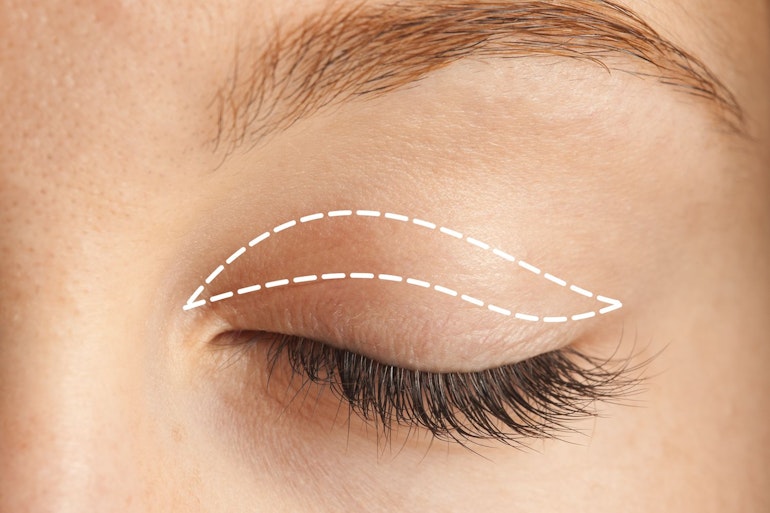
- Procedure: Upper blepharoplasty is typically a day procedure under local anaesthesia, with or without sedation. The incision sits in the natural lid crease, allowing the scar to blend seamlessly.
- Recovery: Swelling and bruising are normal in the first 7–10 days. Most daily activities can resume early, while full refinement continues over several weeks.
- Long-term results: When deeper anatomical contributors are addressed, the outcome appears refreshed, symmetric, and naturally expressive, avoiding the hollow or “over-pulled” look sometimes associated with poorly planned surgery.
Recovery and Risks considerations
Every patient heals differently. It is normal for:
- each eye to heal at a slightly different pace
- swelling to take a few weeks to settle
- the eyelids to feel tight initially
- the final refined result can take up-to take 6 months
Results typically last many years, although natural ageing continues
Upper blepharoplasty is generally a low-risk procedure when performed by a trained oculoplastic surgeon. However, like any surgery, it carries potential risks.
These may include:
- temporary bruising or swelling
- temporary dryness or irritation
- asymmetry during the healing phase
- scarring in the eyelid crease
- rare bleeding or infection
- very rare difficulty closing the eyelids if too much skin is removed
- Temporary numbness around the scar and lash line
Your surgeon will explain these risks and guide you through how they are minimised.
Why should blepharoplasty be performed by an oculoplastic surgeon?
Upper blepharoplasty is a cosmetic and functional procedure that affects both appearance and eye health. The eyelids protect the eyes, maintain moisture, support vision, and express emotion. Poor technique or incomplete assessment can lead to dryness, asymmetry, hollowing, or difficulty closing the eyes.
For this reason, the safest and most effective approach is to have the procedure performed by oculoplastic surgeons, who are ophthalmologists with additional specialised training in eyelid and cosmetic surgery.
This matters because:
- Oculoplastic surgeons understand both the cosmetic and functional aspects of eyelids.
- They are trained to protect the eye, the tear film, and surrounding structures.
- They can identify issues such as ptosis, dry eye risk, or tear gland prolapse which are conditions that non-ophthalmic surgeons may overlook.
- They prioritise visual comfort and eyelid function in addition to aesthetics, which reduces the risk of eye anatomy complications.
With the right assessment and expertise, the result can restore a natural, refreshed, and balanced appearance.
FREQUENTLY ASKED QUESTIONS (FAQs)
Will upper blepharoplasty change the shape of my eyes?
Upper blepharoplasty is designed to rejuvenate the upper eyelids rather than change your natural eye shape. When performed by an experienced oculoplastic surgeon, the procedure follows your existing anatomical contours and focuses on reducing heaviness, improving definition, and restoring balance. The aim is to preserve your natural expression while creating a refreshed, well-rested appearance.
Is the scar from an upper blepharoplasty visible?
The incision is carefully placed within the natural upper eyelid crease, allowing it to blend with the surrounding skin as it heals. In the first few weeks, it may appear slightly pink or raised, but this gradually settles. With time and proper healing, the line becomes faint and often barely noticeable, even when the eyes are closed. Makeup can help conceal the area during the initial healing period.
How long do the results last?
While the ageing process continues naturally, most individuals enjoy the benefits of upper blepharoplasty for many years. Because the procedure addresses deeper anatomical factors such as brow position, fat changes and muscle function rather than just surface-level skin, the results tend to age more gracefully. Lifestyle factors, genetics, and skin quality all play a role in longevity, but improvements are generally long-lasting.
Can blepharoplasty help with vision problems caused by droopy eyelids?
If excess upper eyelid skin hangs over the lash line or reduces the upper field of vision, upper blepharoplasty can alleviate this obstruction and improve vision. During your consultation, the surgeon will assess your eyelid anatomy and visual fields to determine whether functional improvement applies in your case.
Am I too young or too old for this procedure?
There is no strict age limit for upper blepharoplasty. Some individuals develop early genetically inherited hooding, while others experience age-related changes much later. Suitability is determined by eyelid anatomy, skin quality, brow position, and general health, not age alone. A detailed assessment will help determine whether the procedure is appropriate for you.
Will I look “different” after surgery?
The intention of upper blepharoplasty is to create a subtle, refreshed appearance rather than a dramatic change. You should still look like yourself, simply more open and rested around the eyes. A well-planned procedure respects your natural proportions and avoids the “surprised” or “pulled” appearance associated with overcorrection.
What happens if I have asymmetry?
Most people have natural differences between their eyes and brows. While blepharoplasty cannot create perfect symmetry, which rarely exists in nature, an experienced oculoplastic surgeon can significantly improve balance by tailoring the approach for each eye.